


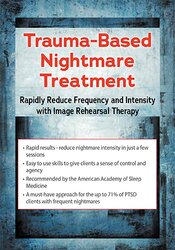
Trauma-Based Nightmare Treatment: Rapidly Reduce Frequency and Intensity with Image Rehearsal Therapy
- Average Rating:
- Not yet rated
- Speaker:
- Lillian Gibson, PhD
- Duration:
- 6 Hours 12 Minutes
- Format:
- Audio and Video
- Copyright:
-
14 Apr, 2025
- Product Code:
- POS059349
- Media Type:
- Digital Seminar
- Access:
- Never expires.

Description
Image rehearsal therapy (IRT) is the evidence-based approach you need to rapidly reduce the frequency and intensity of your clients’ trauma-based nightmares.
Practical and straightforward IRT has empowered thousands of therapists to help their clients confront and change their nightmares with tools and coping skills to rehearse new positive dream scenarios and replace their fear and anxiety with feelings of safety and security.
And it can all be done in just a few sessions.
Now in this live online training, you’ll get a step-by-step guide to bring IRT into your practice in just one day.
Led by trauma treatment expert, Dr. Lillian Gibson, you’ll get session outlines, scripting and the detailed guidance you need to start using IRT right away and feel confident in knowing exactly what to do and what to say from the very first session.
When you register you’ll discover how you can:
- Use imagery exercises to empower clients and disempower nightmares
- Employ techniques to reinforce positive dream scenarios and outcomes
- Tailor IRT to meet the specific needs of your clients
- Enhance engagement and adherence to the therapy
- Manage nightmare anxiety and hyperarousal
- And much more!
And since IRT can be easily integrated with your current approaches, it’s a perfect complement to the trauma treatments you already use with clients.
Image Rehearsal Therapy is a must-have clinical tool if you work with trauma.
Don’t wait to help your clients stop the nightmares and get the restful night’s sleep they deserve.
Purchase now!
CPD
Speaker

Lillian Gibson, PhD Related seminars and products
Lillian Gibson, PhD, is a licensed clinical psychologist with over a decade of experience working with clients facing trauma, insomnia, nightmares, race-based traumas, minority stress, anxiety, depression, and chronic medical conditions. In addition to her clinical duties, she serves as a consultant to other licensed clinicians, and supervises psychology and medical residents on “gold star” evidenced-based psychotherapy treatments. Dr. Gibson is a highly recommended speaker, consultant, and clinician who is frequently engaged by non-profit agencies, community-based programs, and mental health agencies to inform and train their staff. Experienced in a variety of settings including inpatient mental health centers, outpatient behavioral care services, and primary care settings. Dr. Gibson’s professional footprints include places such as Johns Hopkins Medicine and the Quality Education for Minorities Network. Dr. Gibson has also conducted international research in Johannesburg, South Africa.
Speaker Disclosures:
Financial: Dr. Lillian Gibson maintains a private practice and receives compensation as a consultant and speaker. She receives a speaking honorarium and recording royalties from PESI, Inc. She has no relevant financial relationships with ineligible organizations.
Non-financial: Dr. Lillian Gibson is a member of the American Psychological Association, the American Public Health Association, and the Mississippi Psychological Association.
Additional Info
Access for Self-Study (Non-Interactive)Access never expires for this product.
For a more detailed outline that includes times or durations of time, if needed, please contact cepesi@pesi.com
Objectives
- Establish the correlation between post traumatic stress disorder, insomnia, and nightmares.
- Utilise clinical interviews and self-report measures to assess for sleep quality and the frequency, intensity and triggers associated with trauma-related nightmares.
- Utilise CBT strategies, including using sleep restriction and sleep consolidation, to improve sleep quality in clients.
- Demonstrate how to use IRT techniques to guide clients in creating calming images and using imagery exercises to re-script nightmares.
- Illustrate how dream rehearsal techniques can be used to practice and instil positive dream scenarios and outcomes in clients.
- Reduce hyperarousal and anxiety in clients with trauma-based nightmares with mindfulness and relaxation practices.
- Implement solutions to help increase client compliance and manage co-occurring issues in clients to increase treatment efficacy.
Outline
Trauma, Nightmares, Insomnia, and Distressed Sleep
- The relationship between trauma, sleep, and nightmares
- Types of trauma-related nightmares
- Common challenges associated with sleep disturbance
- Harmful habits often seen among individuals desiring restful sleep
Assessment and Treatment Planning
- DSM-5™ diagnoses associated with nightmares
- Using clinical interviews and self-report measures
- Skills for assessing trauma-related nightmares
- Sleep diaries, trauma history, and PTSD checklist
- Differential diagnosis
- Pros and cons of medication management to treat nightmares
A Step-by-Step Guide to Using Image Rehearsal Therapy for Reduced Nightmare Frequency and Intensity
- Session structure outlines and scripts
- Step 1: CBT strategies for better sleep
- Using sleep restriction to decrease clients time in bed laying awake
- Sleep consolidation for less fragmented sleep
- Step 2: IRT to rescript nightmares and reduce emotional intensity
- How to guide clients in creating a calming image
- Imagery exercises that empower clients to re-script nightmares
- Dream rehearsal techniques to practice positive dream scenarios and outcomes
- Guide clients in gradual exposure to traumatic memories during IRT
- Step 3: Target hyperarousal and manage anxiety with mindfulness and relaxation practices
- Adapting IRT for cultural and clinical diversity
- Research, treatment limitations, and risks
Problem Solving Issues Related to Treatment Implementation
- Practical steps to increase client compliance
- When clients can’t create clear detailed imagery
- Co-occurring issues
- Best practices to increase treatment efficacy
Nightmare Treatment Case Studies
- 27-year-old woman with childhood trauma
- 45-year-old man who has been diagnosed with PTSD related to a workplace accident
- 28-year-old woman who was involved in a mass shooting
Target Audience
- Counsellors
- Social Workers
- Psychiatrists
- Psychologists
- Addiction Counsellors
- Marriage and Family Therapists
- Therapists
- Physicians
- Nurses
- Other Professionals Who Work within the Mental Health Fields
Reviews
Satisfaction Guarantee
Your satisfaction is our goal and our guarantee. Concerns should be addressed to info@pesi.co.uk or call 01235847393.
Please wait ...